Set the rules. Enforce them everywhere.
Satisfy AI security standards with opt-in coverage and define custom policies in natural language to enforce rules across prompts, responses, and agent actions.
Get a demo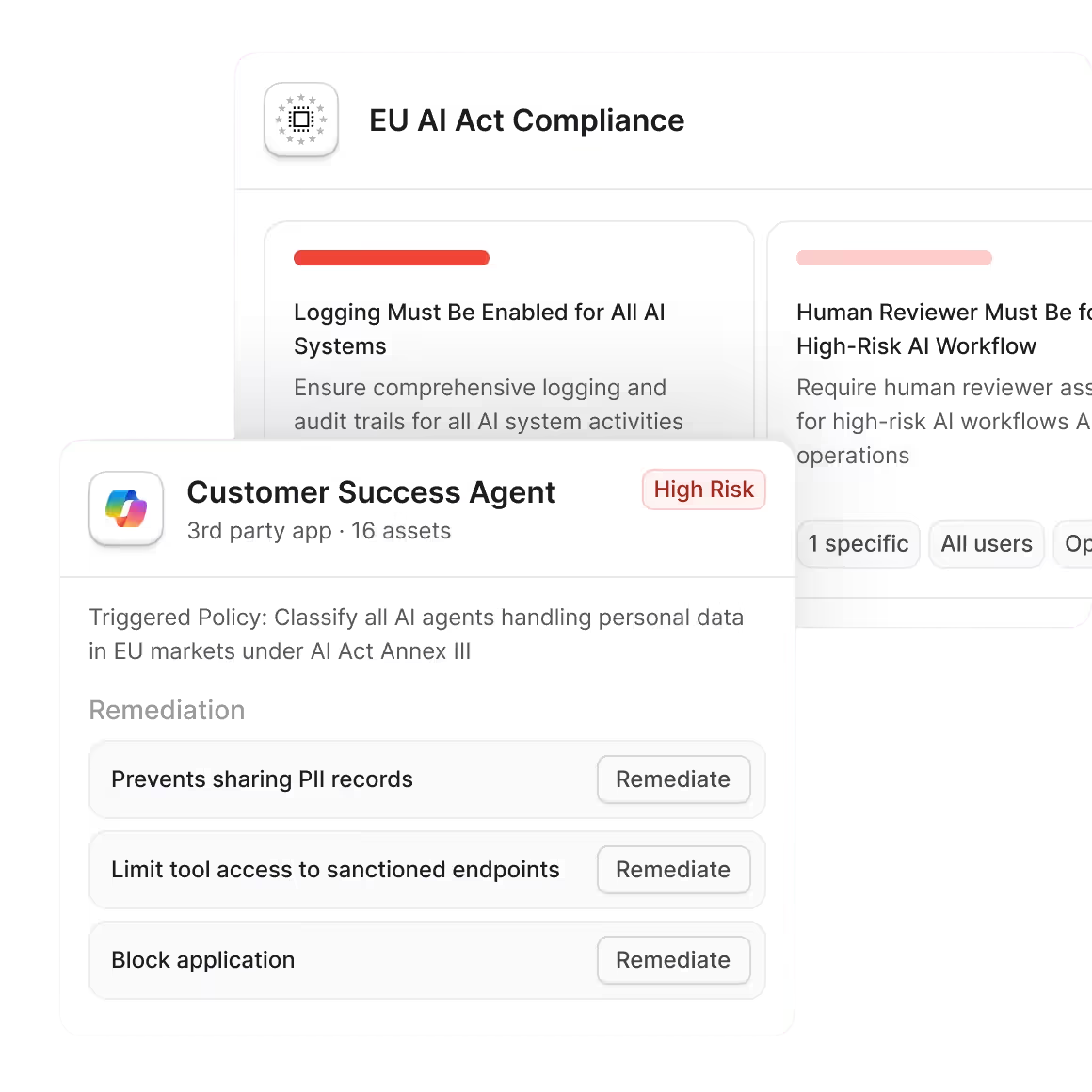








The Onyx Approach
Most AI governance requires security engineers to write rules in bespoke vendor-specific languages, security practitioners to describe what the policy should do, and compliance analysts to map it to a framework. None of them read the code that actually enforces it.
Onyx replaces the code-based bottleneck with natural language. Security teams write policies in natural language. Onyx compiles it into runtime enforcement and applies it across every current and future agent in scope, and across the MCP servers those agents reach. The platform refines the rule as the environment changes, so policy never drifts away from intent.

The Onyx Difference
Designed for the Agent Identity
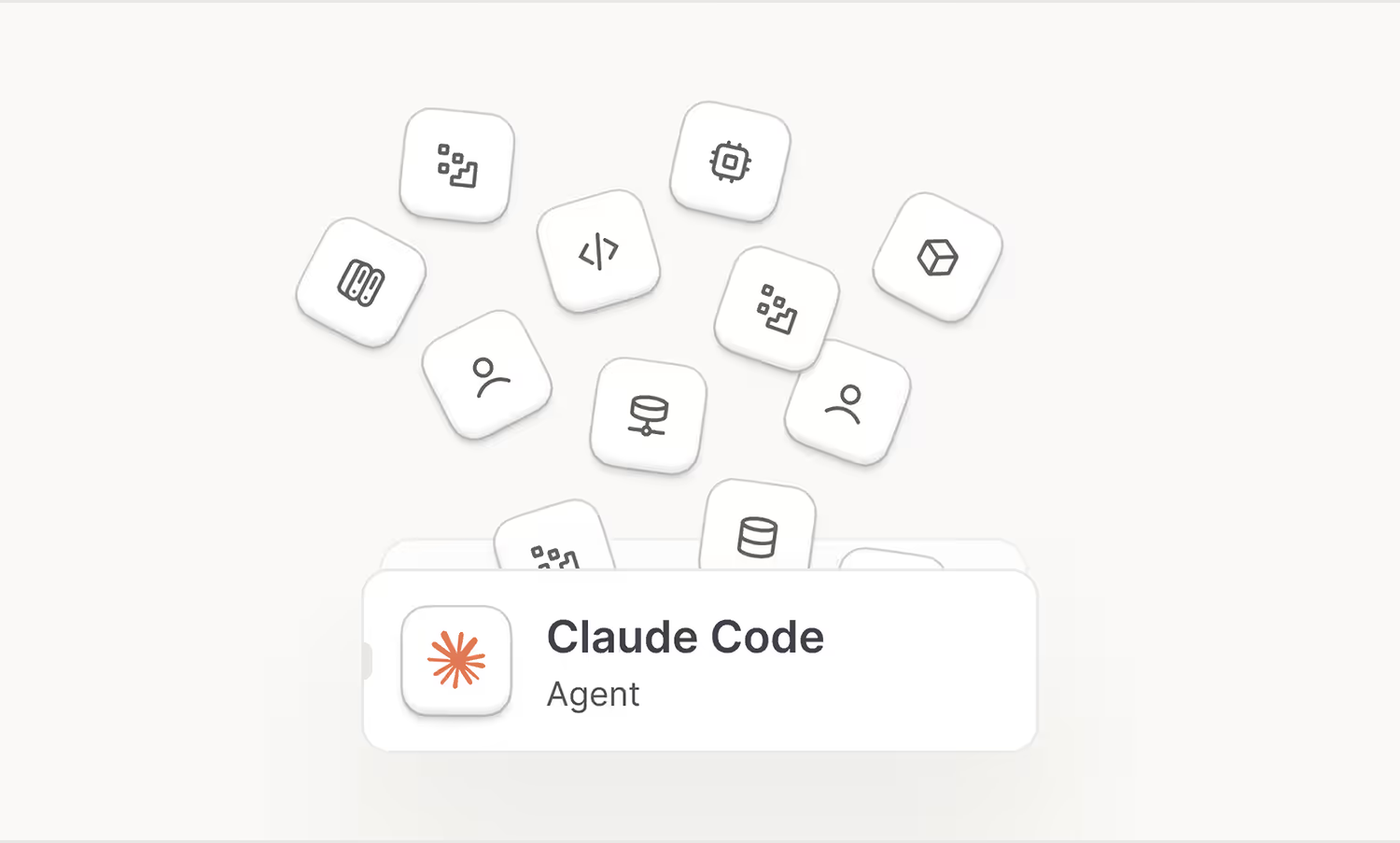
When multiple users delegate to the same agent across tools, Onyx gives that agent its own identity, separate from the invoker. Govern, audit, and control one agent actor with one line of accountability, instead of reconciling scattered audit trails that only make sense one credential at a time.
Natural Language & Automated Compliance
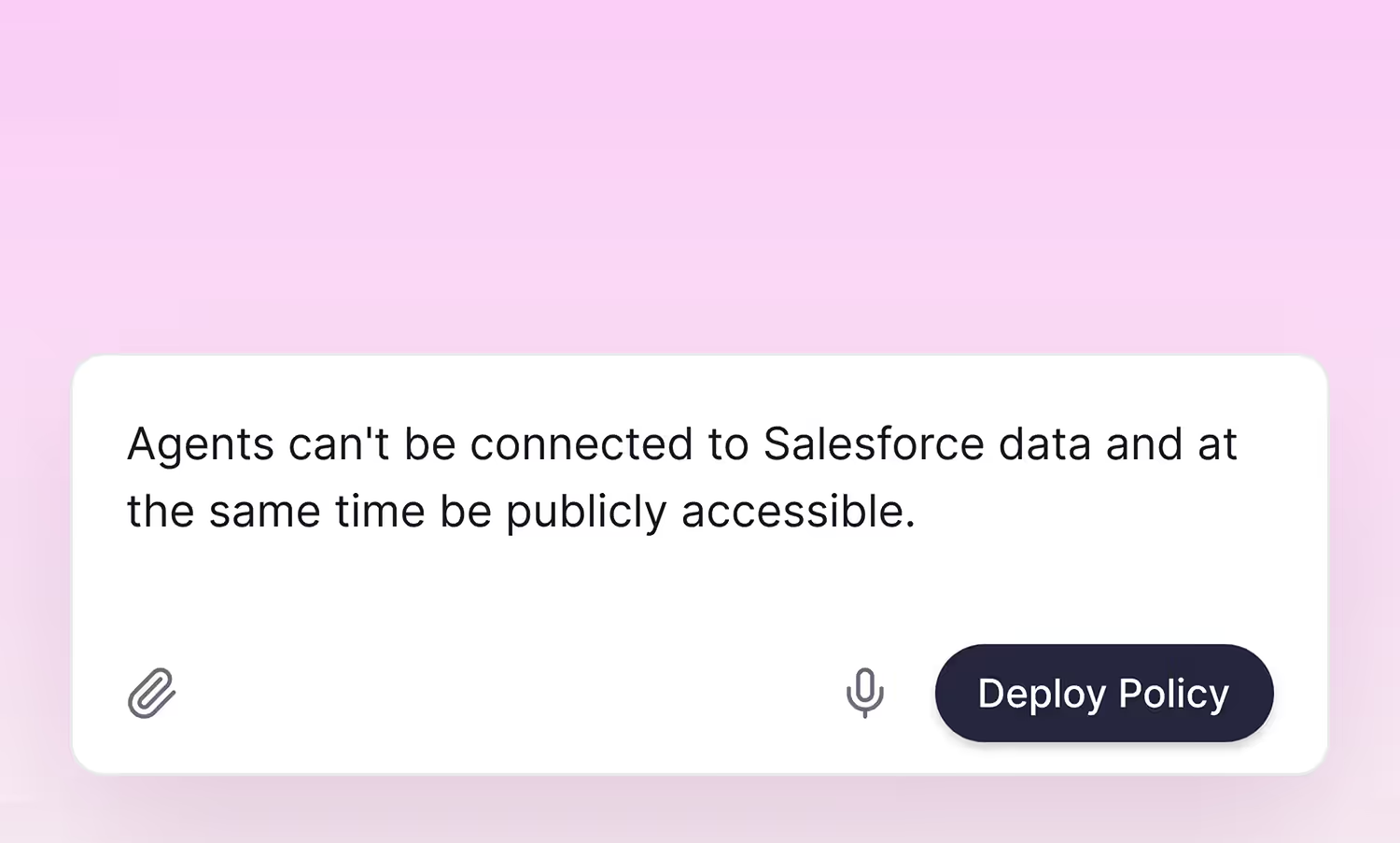
Write policy in natural language and Onyx translates policy intent into runtime enforcement, with automatic mapping to OWASP LLM Top 10, NIST AI RMF, MITRE ATLAS, EU AI Act, and ISO 42001. No code required, so policy author and enforcer read from the same source of truth.
Complete Control Over Every Agent Tool
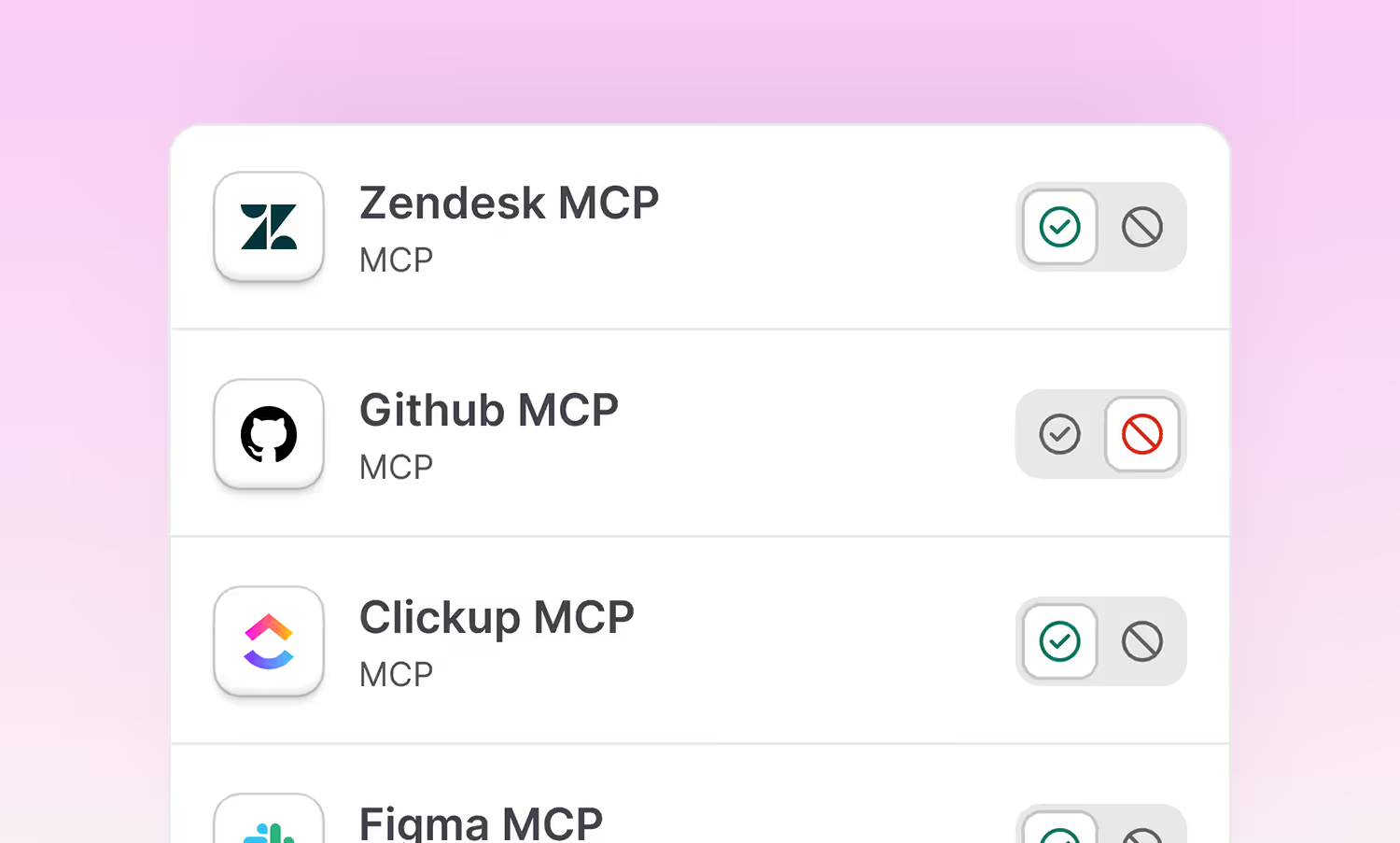
Specify the tools and MCP servers you trust, and block the rest. Onyx governs every agent tool, not just MCP: direct API calls, coding-agent hooks, base-URL integrations, and the MCP ecosystem all fall under one policy. When a new tool or server is detected, Onyx finds it, scores it for risk, and routes the approval decision before any agent uses it, keeping the trusted set current as the tool landscape grows.
See Onyx Connect to Your Stack
Onyx drops in next to the identity, cloud, network, and endpoint tools your team already runs. Most environments produce a working AI inventory within 24 hours and an enforced governance policy on day one. To see real-time AI security across your stack...
schedule a demoConnects to the Tools You Already Run
Onyx integrates in two directions. Inbound, Onyx consumes identity context to attribute every policy decision. Outbound, alerts and their associated session records forward to your SIEM.
- Every governed agent carries its own identity, aligned with the user behind it, giving every action a clear line of accountability from person to tool.
- Violations and their session records synchronize with your SIEM, keeping compliance evidence and audit response in the tools your security and GRC teams already use.
- Framework mappings for OWASP LLM Top 10, NIST AI RMF, MITRE ATLAS, EU AI Act, and ISO 42001 are applied automatically, so audit and regulator responses draw from the same policy record.

Frequently Asked Questions
You write the intent in plain English. Onyx compiles it into enforcement logic, applies it across every agent in scope, and logs every decision with a traceable record back to the original statement.
OWASP LLM Top 10, NIST AI RMF, MITRE ATLAS, EU AI Act, and ISO 42001.
Standard IAM governs humans and service accounts. AI agents are neither. Each governed agent carries its own Onyx-attributed identity, distinct from the user who invoked it, and the same record tracks the per-tool-call and per-MCP-call identities the agent uses at each step.
DLP and SASE enforce at the network or file level. They were not built to inspect AI agent tool calls or apply policy logic the moment an action would execute. Onyx operates at the agent behavior layer and forwards alerts and sessions to your SIEM, extending your existing investigation surface rather than replacing it.