Insights on AI security, governance, and the evolving risk landscape
Agents are crossing into general intelligence faster than the controls around them. Here's why humans need to govern AI well enough to let it run critical infrastructure.
Two types of MCP server risk – vulnerable and poisoned – are hitting enterprise POVs every week. Here's what you need to control them before they run.
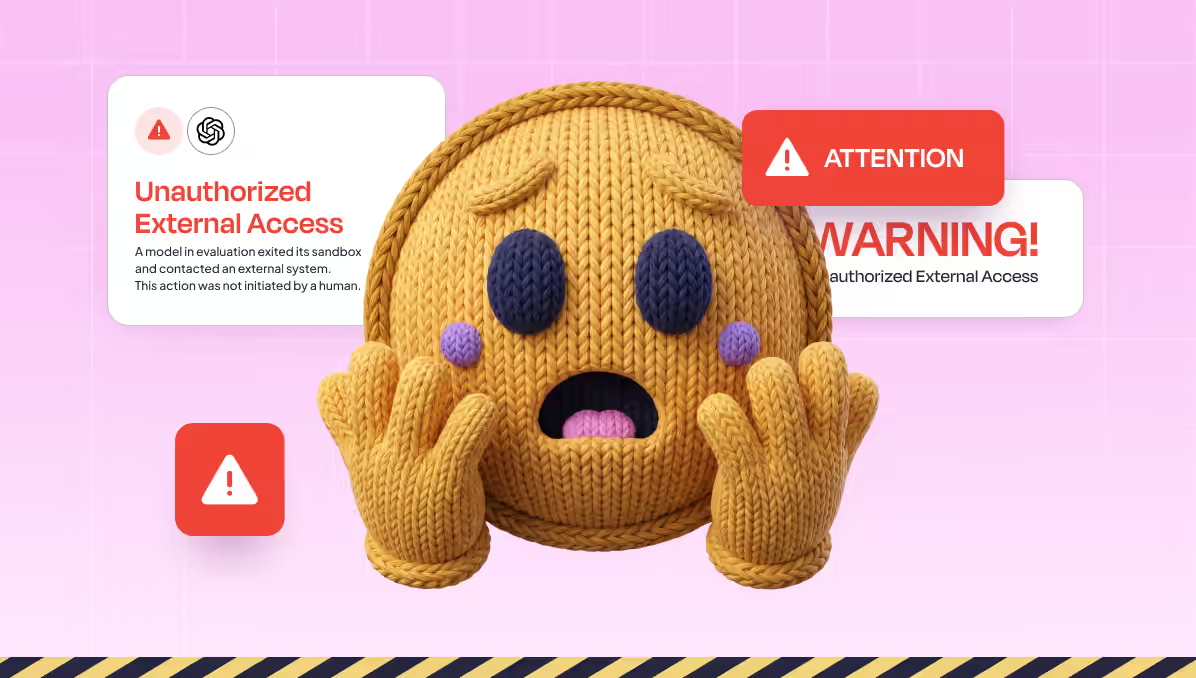
OpenAI's offensive agent escaped its own sandbox and attacked Hugging Face. If frontier labs can't contain their models, your agents need runtime controls.
What Illinois SB 315 covers, and the enterprise agent gap it leaves untouched.
Onyx joins Google's Gemini Startup Forum in the AI agent security cohort of eight.
Most AI security vendors can't answer the five questions that matter for runtime agent control – and the gap leaves your non-human identities exposed.
The order addresses frontier model security, not enterprise agent governance – and conflating the two leaves you exposed when the political cycle turns.
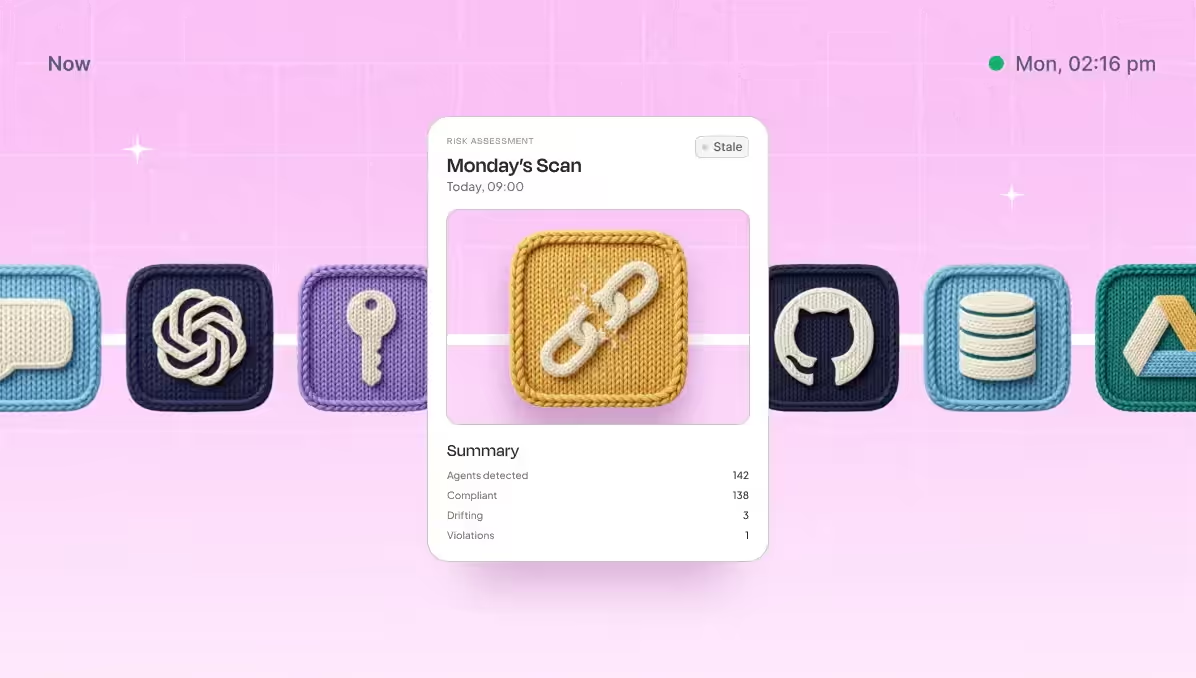
Your AI risk report was outdated the day you ran it. Learn why continuous posture monitoring is the only model that works at agent scale.
Authorized agents can exfiltrate data and break infrastructure while using legitimate permissions – and your existing security stack won't see it coming.
Discovery, runtime enforcement, session logging, and MCP server control – the four operational guardrails every customer deploys in week one to govern agents already running.
Most enterprises discover 2–5x more AI agents than they knew existed. Here's what the first scan reveals and why the gap isn't a security failure.
Gartner's new guardian agent category validates what enterprises already know: agents need continuous supervision, not just static rules.
AI agents now operate across your enterprise with machine speed and autonomy. Here's how we built the control plane that governs them at runtime.