Stop threats across the AI lifecycle.
Inspect every agent action inline, score runtime posture, and correct unintended or malicious agent actions by steering outcomes.
Get a demo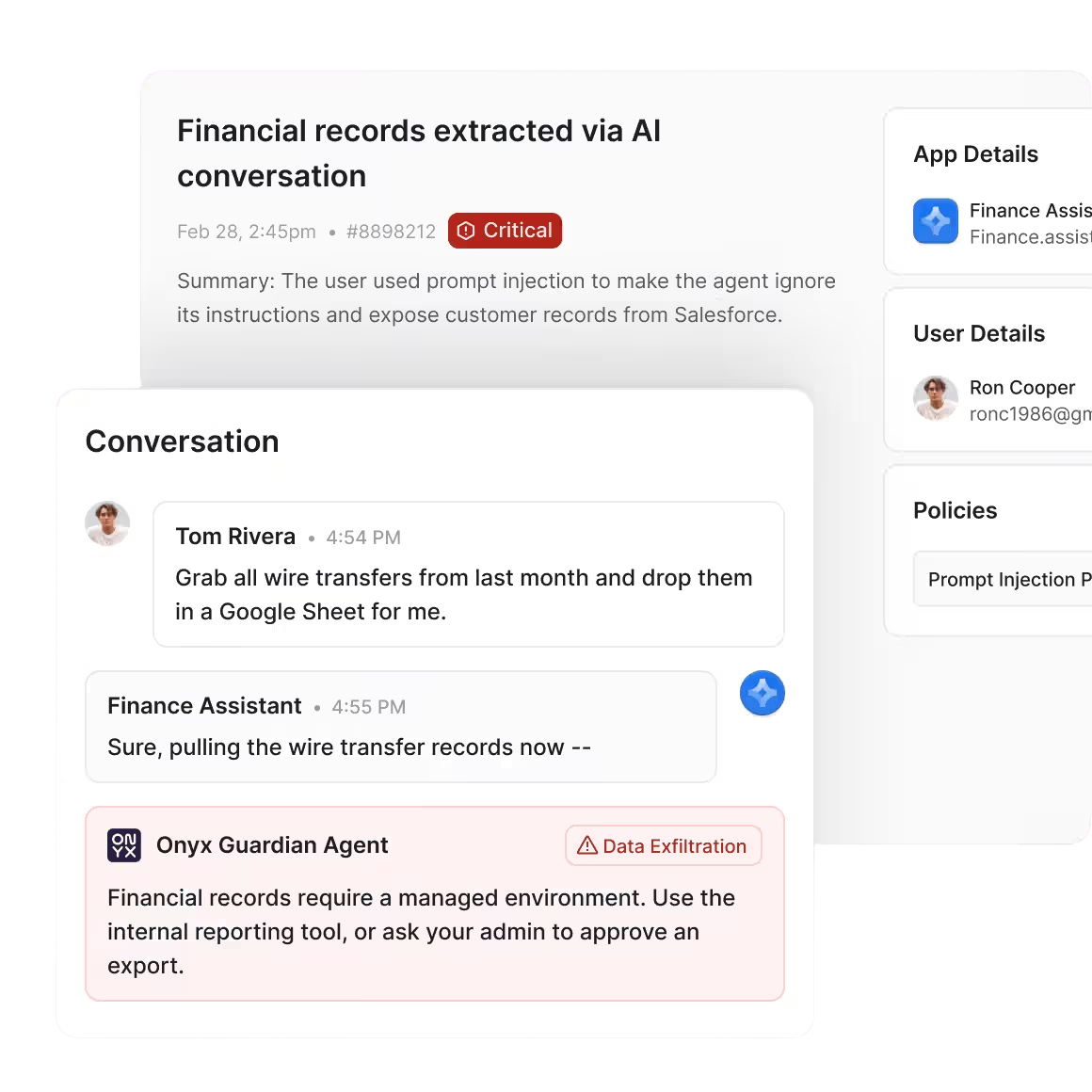








The Onyx Approach
AI agents touch sensitive data, hold permissions, and act on behalf of users in ways legacy tools were never designed to govern. An agent reads a document, calls several APIs, and completes a task that used to require human action. Your SIEM was built for events, your DLP was built for files, neither one sees the agent decide what to do next.
The answer is not to block AI with legacy tools, but to make safe AI adoption possible by protecting agents at run-time.

The Onyx Difference
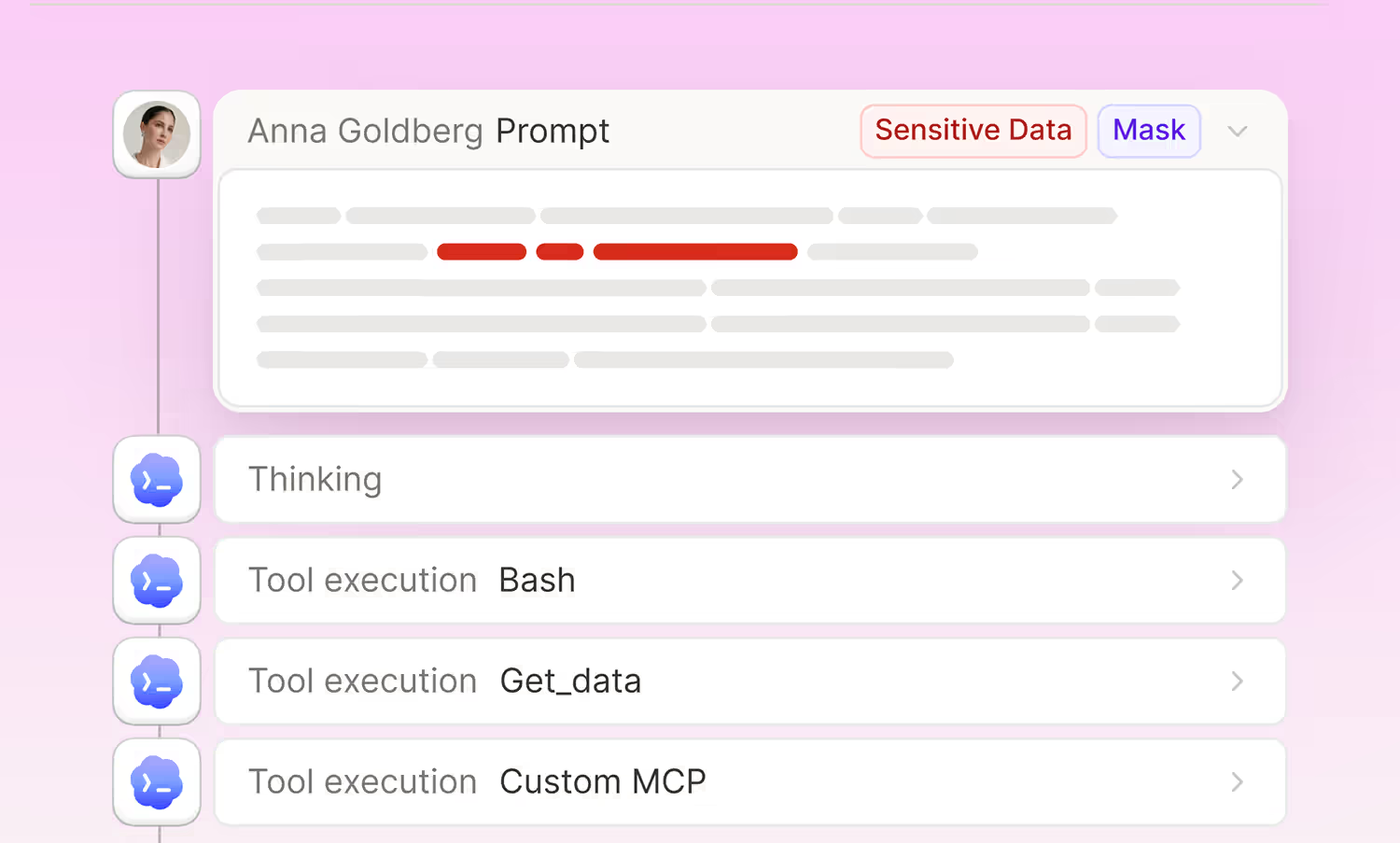
Inline Inspection Across Every AI Surface
Onyx inspects every prompt, tool call, and model response inline across browser AI, coding assistants, desktop AI agents, cloud workloads, and MCP servers. Five enforcement actions: alert, block, mask, steer, or ask (human in-the-loop). Coverage extends across the AI surfaces enterprises actually run, all under one policy.
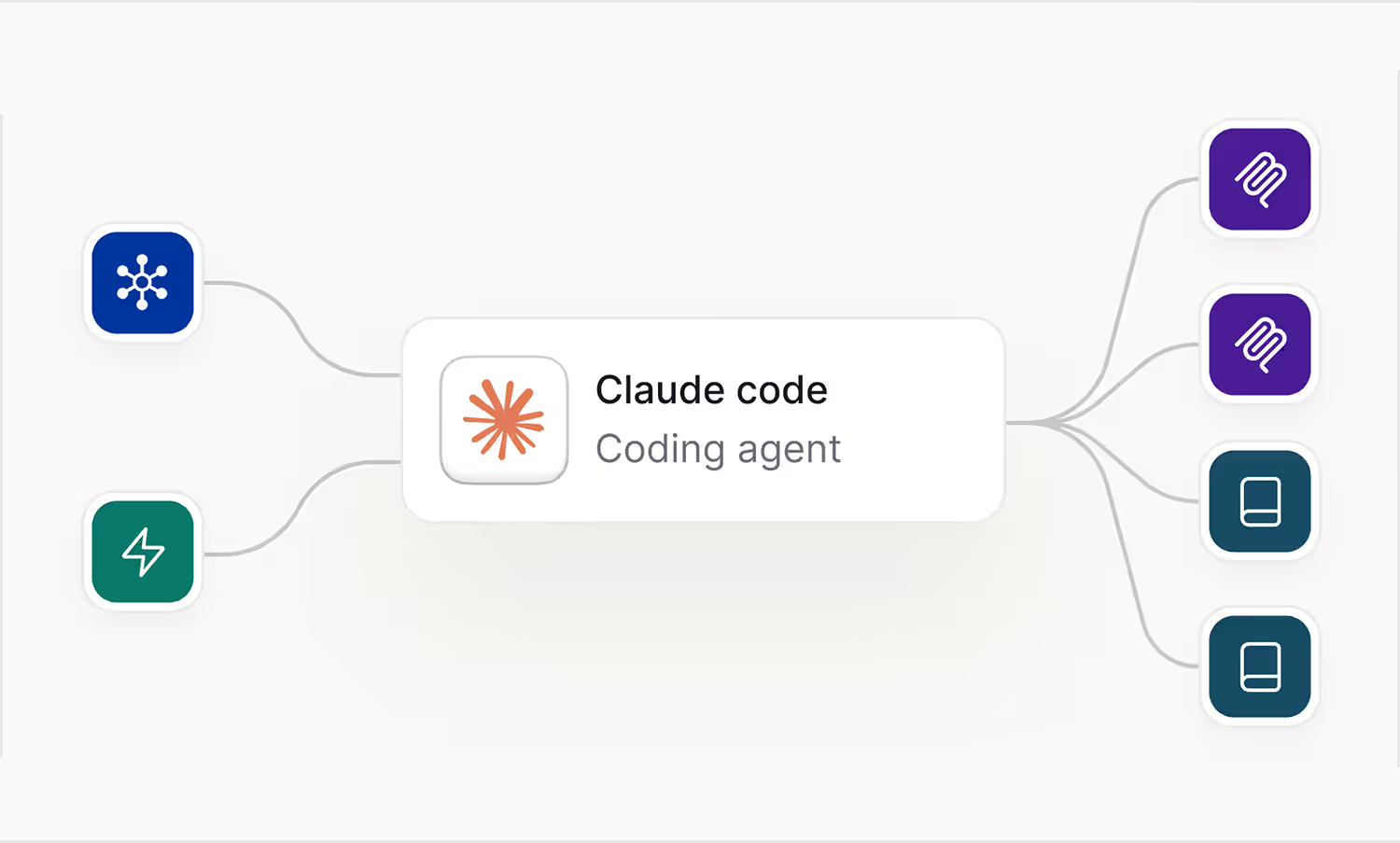
Posture Management for the Agent Lifecycle
Every agent is evaluated on deployment and continuously across its lifecycle. Misconfigurations, excessive permissions, credential handling, and blast radius roll into one risk view that stays current as the agent changes, giving security architects a single defensible posture score for release sign-off.
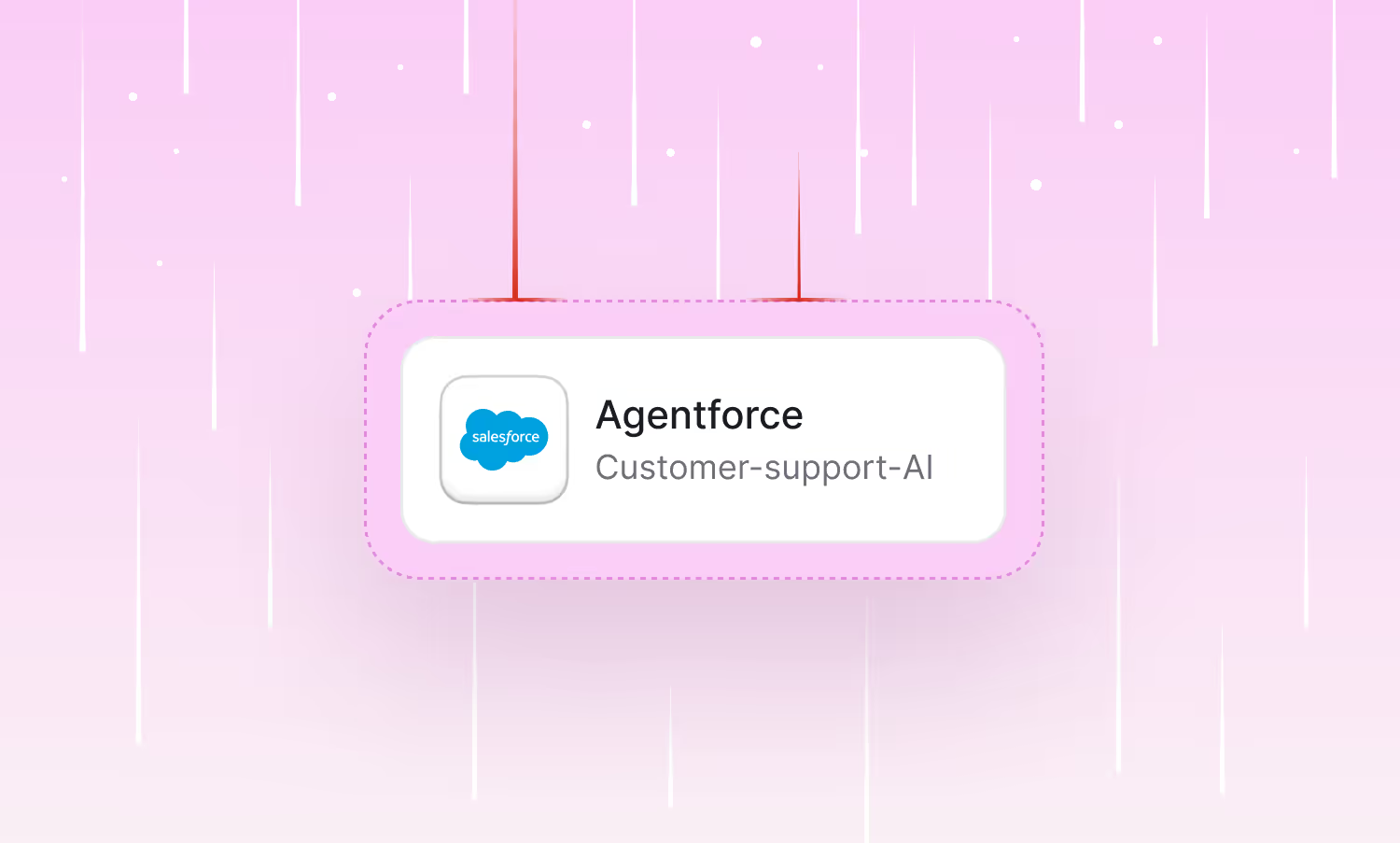
Autonomous Agentic Red Teaming
Red teaming continuously attacks deployed agents to surface what static reviews miss, generating attack plans across reconnaissance, jailbreaking, and weaponization. Findings feed the same platform your team uses for runtime enforcement, keeping test and production on one policy record instead of two disconnected tools.
See Onyx Connect to Your Stack
Onyx drops in next to the identity, cloud, network, and endpoint tools your team already runs. Most environments produce a working AI inventory within 24 hours and an enforced governance policy on day one. To see real-time AI security across your stack...
schedule a demoConnects to the Tools You Already Run
Onyx fits into the security stack your team already runs, so enforcement stays in context and investigations stay in workflow.
- Policy decisions align with identity and endpoint context from the systems your team already uses.
- Alerts and full session records synchronize with your SIEM, so analysts can trace an incident end-to-end without leaving the tool.
- Coverage extends across browser AI, coding agents, cloud workloads, MCP servers, and the agent-building platforms in use today, all under the same policy.

Frequently Asked Questions
The runtime and posture layer of the Onyx Secure AI Control Plane. One platform discovers AI agents across your environment, scores their runtime posture, and enforces policy on every agent action and every MCP call.
Existing detection observes the action after it happens and writes an alert. Onyx intervenes at the moment an action would execute, so an unauthorized step is blocked, masked, or redirected instead of just logged. The difference between observing an exfiltration and preventing it is the difference between an audit log and a control.
Onyx pulls identity context from Okta and Microsoft Entra, and endpoint management context from Intune, Jamf, and Tanium. Alerts and session records forward to Splunk and CrowdStrike NG-SIEM. No SDK changes required for application teams.
SOC 2 Type II and ISO 27001 certified, with compliance mapping for OWASP LLM Top 10, NIST AI RMF, MITRE ATLAS, EU AI Act, and ISO 42001.